Bulging Disc Spinal Decompression | Los Angeles, CA
Can spinal decompression help a bulging disc? For many patients, non-surgical spinal decompression is a first option worth trying before surgery. It’s designed to gently reduce pressure on the affected disc and relieve the nerve irritation causing pain in the lower back or leg.
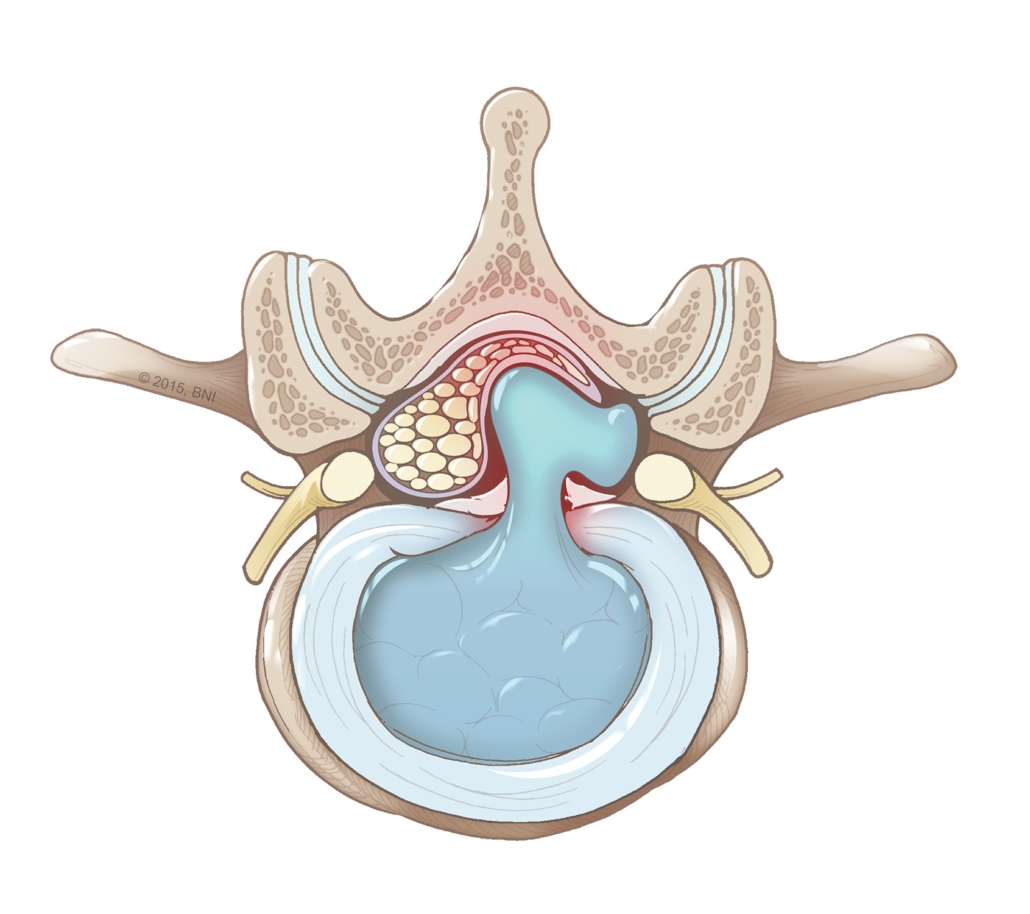
WHAT IS A BULGING DISC, AND WHY DOES IT CAUSE PAIN? A bulging disc happens when the outer layer of a spinal disc extends beyond its normal boundary. Unlike a herniated disc, it doesn’t necessarily rupture. Even so, a bulging disc can press on nearby nerves, causing localized back pain or pain that radiates into the leg.
HOW NON-SURGICAL SPINAL DECOMPRESSION WORKS Los Angeles Spinal Decompression® uses the DRX9000, one of the most researched non-surgical spinal decompression technologies available. It’s FDA-cleared, with 28 clinical studies behind it, including 20 in peer-reviewed journals. Unlike general traction, DRX9000 creates a controlled, gentle stretch that targets pressure on the affected disc.
BULGING DISC VS. HERNIATED DISC A bulging disc extends beyond its normal boundary without necessarily rupturing. A herniated disc’s outer layer ruptures, and inner material leaks out. Bulging discs often cause more localized pain. Herniated discs often cause more severe nerve-related pain. Many patients try non-surgical decompression first for either, before considering surgery.
WHAT TO EXPECT AT YOUR FIRST VISIT Dr. Michael C. Karr, D.C. is a UCLA Kinesiology graduate who completed a postgraduate program in radiology. He has led decompression care in West LA for over 35 years. Ground floor, free parking, paperless intake.
Individual results vary. Not medical advice. A clinical evaluation determines spinal decompression candidacy. Consult a qualified healthcare professional before beginning treatment.
📞 Call Betty: 310-914-9422 🌐 LosAngelesSpinalDecompression.com 📍 11340 W. Olympic Blvd., Suite 160, Los Angeles, CA 90064
https://losangelesspinaldecompression.com/wp-content/uploads/2018/04/logo-web-300x103-300x103.png00ADAMhttps://losangelesspinaldecompression.com/wp-content/uploads/2018/04/logo-web-300x103-300x103.pngADAM2026-08-29 22:38:552026-08-29 22:42:37Bulging Disc Spinal Decompression | Los Angeles, CA
What Artificial Disc Replacement Actually Involves
Artificial disc replacement (ADR) removes a damaged spinal disc entirely and replaces it with a mechanical implant, aiming to preserve motion better than spinal fusion. It’s performed under general anesthesia, typically through an anterior (front) surgical approach near major blood vessels and nerves.
The Risks Rarely Discussed Upfront
Like any major surgery, ADR carries documented risks: infection at the surgical site, nerve injury, blood clots, and persistent pain even after a technically successful procedure. Specific to the implant itself, the device can wear, loosen, or migrate over time — and the spinal segments above or below it can degenerate as a result of the altered mechanics.
A peer-reviewed systematic review found that 3.7% to 11.4% of ADR patients require revision surgery — a second operation to address a failed or migrated implant.
Non-Surgical Spinal Decompression using the DRX9000 applies precisely calibrated traction to the spine, designed to reduce pressure on a damaged disc without an incision, an implant, or general anesthesia. It’s FDA-cleared and backed by 28 clinical studies, 20 of them published in peer-reviewed journals. Not every patient is a candidate — that’s determined through evaluation and imaging, not guesswork.
How the Two Options Compare
Artificial Disc Replacement
Non-Surgical Spinal Decompression (DRX9000)
Invasiveness
Major surgery, general anesthesia
Non-invasive, no anesthesia
Recovery
Weeks to months
No downtime between sessions
Revision risk
3.7–11.4% require a second surgery
No implant to fail or migrate
Reversibility
Not reversible once implanted
Fully non-permanent
What This Means for You
If you’ve been told artificial disc replacement is your only option, a second opinion that includes a non-surgical evaluation is a reasonable step before committing to permanent surgery. At Los Angeles Spinal Decompression®, your first visit includes a review of your imaging and history to determine whether you’re a genuine candidate for DRX9000 — honestly, not just as a sales pitch.
Frequently Asked Questions
Is artificial disc replacement safer than spinal fusion?
Research comparing the two shows similar safety profiles at 5-year follow-up, though device failure has specifically been observed in disc replacement patients between years 2 and 5 that isn’t a factor with fusion.
How often does artificial disc replacement fail?
A systematic review found 3.7% to 11.4% of patients require revision surgery due to implant failure, migration, or other complications.
Is non-surgical spinal decompression a real alternative to disc replacement surgery?
For appropriately screened candidates, yes — it’s a non-invasive, FDA-cleared option worth ruling out before committing to permanent surgical implantation. Candidacy is determined through evaluation and imaging.
✅ FDA-cleared DRX9000, backed by 28 clinical studies ✅ No incision, no implant, no general anesthesia ✅ First treatment: $149 with approved MRI ✅ Most PPO insurance accepted
📞 Call Betty: 310-914-9422 🌐 losangelesspinaldecompression.com 📍 11340 W. Olympic Blvd., Suite 160, Los Angeles, CA 90064
Individual results vary. This content is for informational purposes only and does not constitute medical advice. Consult a qualified healthcare professional before beginning any treatment program. Spinal decompression candidacy determined by clinical evaluation.
Yours in health, Los Angeles Spinal Decompression® 📞 310-914-9422 🌐 losangelesspinaldecompression.com 📘 facebook.com/LosAngelesSpinalDecompression 📸 instagram.com/losangelesspinaldecompression ▶️ youtube.com/@LosAngelesSpinalDecompression 🐦 twitter.com/ladecompression 📝 losangelesspinaldecompression.blogspot.com
Descompresión Espinal vs Cirugía de Columna: Lo Que Debe Saber Antes de Decidir
¿Está considerando cirugía de columna por un disco herniado, ciática, o enfermedad degenerativa del disco? Vale la pena conocer primero la descompresión espinal vs cirugía como opción no quirúrgica. Una revisión de 2025 con 267 pacientes encontró que el dolor bajó de 6.9 a 2.5 en una escala de 10 puntos, y el 90.5% de los pacientes reportó mejoría (Schueren et al., Military Medicine, 2025) — sin necesidad de cirugía.
Por qué vale la pena considerar la opción conservadora primero
La cirugía de columna no siempre es reversible, y no siempre funciona. De hecho, el síndrome de cirugía de espalda fallida — dolor persistente, entumecimiento, o la necesidad de otra cirugía — afecta aproximadamente a 1 de cada 5 pacientes pocos años después del procedimiento (Inoue et al., 2017, citado en Schueren et al., 2025). De los pacientes que ya tuvieron una cirugía de espalda, solo alrededor del 30% obtiene alivio adecuado, y hasta el 70% termina teniendo otra (Thomson & Jacques, 2009, citado en Connolly et al., 2025). Por esta razón, muchos pacientes eligen probar primero el cuidado conservador — y hacerlo no cierra la puerta a la cirugía después, si todavía es necesaria.
Lo que muestra la investigación de 2025
Dos estudios revisados por expertos, publicados en 2025, examinaron directamente los resultados de la descompresión espinal no quirúrgica:
Una revisión retrospectiva en Military Medicine analizó 267 pacientes en siete clínicas (Schueren et al., 2025; los investigadores, de la Universidad del Sur de Florida, no tienen afiliación con Los Angeles Spinal Decompression®). El dolor bajó de 6.9 a 2.5 en promedio, y los pacientes también mejoraron en fuerza muscular (74.8%), sensibilidad (77.6%), y reflejos (60.9%).
Una serie de casos separada en el Journal of Contemporary Chiropractic siguió a 13 pacientes tratados con tecnología DRX9000 — la misma tecnología que se usa en LASD — durante 20 sesiones (Connolly et al., 2025). Las resonancias magnéticas de seguimiento mostraron aumentos medibles en la altura del disco, y el 77% de los pacientes tuvo una reducción visible en el tamaño de la hernia discal.
Descompresión Espinal vs Cirugía: Comparación Directa
Descompresión Espinal No Quirúrgica
Cirugía de Columna (ej. fusión)
Incisión/anestesia
Ninguna
Requerida
Recuperación típica
Regreso a actividad el mismo día
Semanas a meses
Reversibilidad
No permanente
Cambio permanente en la biomecánica espinal
Costo aproximado
Una fracción del costo quirúrgico
Promedia ~$22,890 por nivel, hasta $110,000 (Beckerman et al., 2020, citado en Connolly et al., 2025)
Investigación 2025
90.5% reportó mejoría del dolor, n=267 (Schueren et al., 2025); aumento de altura del disco confirmado por RM, n=13 (Connolly et al., 2025)
~20.6% de riesgo de síndrome de cirugía de espalda fallida (Inoue et al., 2017)
Cuándo no es apropiada
Fractura, inestabilidad, tumor, infección
A veces todavía necesaria cuando el cuidado conservador falla
Cómo el Dr. Karr evalúa su candidatura
El Dr. Michael Karr, graduado en Kinesiología de UCLA que ha tratado pacientes en West LA desde 1989, revisa personalmente su resonancia magnética o radiografías antes de recomendar descompresión espinal no quirúrgica. No todos los pacientes califican — por eso esta evaluación es tan importante: determina si el cuidado conservador es un primer paso seguro y apropiado para usted.
✅ DRX9000 aprobado por la FDA — 28 estudios clínicos, 20 revisados por expertos ✅ El Dr. Karr revisa personalmente su resonancia magnética o radiografías ✅ $149 primer tratamiento con resonancia magnética aprobada ✅ Aceptamos la mayoría de seguros PPO (Medicare no cubre la descompresión espinal)
Estamos ubicados en 11340 W. Olympic Blvd., Suite 160 — planta baja, estacionamiento gratuito. Servimos West LA, Santa Monica, Brentwood, Beverly Hills, Culver City, Bel Air, Venice, y Westwood.
Llame a Betty: 310-914-9422
Preguntas Frecuentes
¿La descompresión espinal está comprobada, o es solo una afirmación de mercadeo?
Dos estudios revisados por expertos midieron resultados directamente en 2025 — una revisión de 267 pacientes que rastreó el dolor y la función neurológica (Schueren et al., Military Medicine, 2025), y un estudio más pequeño que confirmó cambios estructurales del disco mediante resonancia magnética (Connolly et al., J Contemp Chiropr, 2025). Los resultados no están garantizados para cada paciente, pero la base de investigación ha crecido considerablemente.
¿Qué pasa si voy directo a cirugía sin probar la descompresión primero?
La cirugía a veces es necesaria y no siempre se puede evitar. Sin embargo, la investigación muestra que aproximadamente 1 de cada 5 pacientes de cirugía de espalda desarrolla complicaciones continuas (Inoue et al., 2017), y solo alrededor del 30% obtiene alivio adecuado con un solo procedimiento (Thomson & Jacques, 2009). Por eso probar el cuidado conservador primero no elimina la cirugía como opción más adelante.
¿Los seguros cubren la descompresión espinal?
Aceptamos la mayoría de los planes PPO. Medicare no cubre la descompresión espinal, así que llame a Betty para verificar su cobertura específica.
¿Necesito una resonancia magnética primero?
Sí — la oferta de $149 para el primer tratamiento requiere una resonancia magnética aprobada, que también ayuda a confirmar la candidatura. El Dr. Karr la revisa personalmente.
Los resultados individuales pueden variar. Este contenido es solo para fines informativos y no constituye asesoramiento médico. Consulte a un profesional de la salud calificado antes de comenzar cualquier programa de tratamiento. La candidatura para la descompresión espinal se determina mediante evaluación clínica.
Fuentes: Schueren S, Luginsland LA, Ariza Medina G, Schilaty ND. Retrospective Chart Review of Nonsurgical Spinal Decompression as a Therapeutic Modality for Low Back Pain. Military Medicine 2025;190(Suppl 2):134–140. Connolly JA, Luginsland LA, Welsh S, et al. Clinical and Imaging Outcomes of Nonsurgical Spinal Decompression for Lumbar Intervertebral Disc Lesions: A Case Series. J Contemp Chiropr 2025;8:81–87.
📞 Llame a Betty: 310-914-9422 🌐 LosAngelesSpinalDecompression.com 📍 11340 W. Olympic Blvd., Suite 160, Los Angeles, CA 90064 📘 facebook.com/LosAngelesSpinalDecompression 📸 instagram.com/losangelesspinaldecompression ▶️ youtube.com/@LosAngelesSpinalDecompression 🐦 twitter.com/ladecompression 📝 losangelesspinaldecompression.blogspot.com
https://losangelesspinaldecompression.com/wp-content/uploads/2018/04/logo-web-300x103-300x103.png00ADAMhttps://losangelesspinaldecompression.com/wp-content/uploads/2018/04/logo-web-300x103-300x103.pngADAM2026-08-09 16:10:562026-08-09 16:10:56Descompresión Espinal vs Cirugía de Columna: Lo Que Debe Saber Antes de Decidir
Weighing spinal decompression vs back surgery for a herniated disc, sciatica, or degenerative disc disease? A 2025 chart review of 267 patients found pain scores dropped from 6.9 to 2.5 on a 10-point scale. In fact, 90.5% reported improvement (Schueren et al., Military Medicine, 2025).
Why “conservative first” matters
Back surgery isn’t always reversible, and it doesn’t always work. In fact, failed back surgery syndrome affects roughly 1 in 5 patients within a few years of their procedure (Inoue et al., 2017, as cited in Schueren et al., 2025). This includes ongoing pain, numbness, or the need for repeat surgery. Of patients who’ve had one back surgery, only around 30% get adequate relief. Up to 70% end up having another (Thomson & Jacques, 2009, as cited in Connolly et al., 2025). Because of this, many patients choose to try conservative care first. Doing so doesn’t close the door on surgery later if it’s still needed.
What the 2025 research shows
Two separate peer-reviewed studies published in 2025 looked directly at non-surgical spinal decompression outcomes.
Pain and neurological outcomes
A retrospective chart review in Military Medicine analyzed 267 patients across seven clinics (Schueren et al., 2025). The researchers, at the University of South Florida, are not affiliated with Los Angeles Spinal Decompression®. Pain dropped from 6.9 to 2.5 on average. Patients also improved in muscle strength (74.8%), sensation (77.6%), and reflexes (60.9%).
MRI-confirmed structural changes
A separate case series in the Journal of Contemporary Chiropractic followed 13 patients for 20 sessions of DRX9000 treatment — the same technology used at LASD (Connolly et al., 2025). Follow-up MRI scans showed measurable increases in disc height and spinal canal space. As a result, 77% of patients had a visible reduction in disc herniation size.
Additionally, 28 clinical studies have now examined the DRX9000, and 20 of them are peer-reviewed (per DRX9000 manufacturer-compiled research summary).
Spinal Decompression vs Back Surgery: Side-by-Side Comparison
Non-Surgical Spinal Decompression
Back Surgery (e.g., fusion)
Incision/anesthesia
None
Required
Typical recovery
Same-day return to activity
Weeks to months
Reversibility
Non-permanent
Permanent change to spinal biomechanics
Approximate cost
A fraction of surgical cost
Averages ~$22,890 per level, up to $110,000 (Beckerman et al., 2020, as cited in Connolly et al., 2025)
2025 research
90.5% reported pain improvement, n=267 (Schueren et al., 2025); MRI-confirmed disc height increase, n=13 (Connolly et al., 2025)
~20.6% risk of failed back surgery syndrome (Inoue et al., 2017)
When it’s not appropriate
Fracture, instability, tumor, infection
Sometimes still necessary once conservative care fails
How Dr. Karr evaluates candidacy
Dr. Michael Karr is a UCLA Kinesiology graduate who has treated patients in West LA since 1989. He personally reviews your MRI or X-rays before recommending non-surgical spinal decompression. Not every patient qualifies. That’s exactly why this evaluation matters — it determines whether conservative care is a safe, appropriate first step for you.
✅ FDA-cleared DRX9000 — 28 clinical studies, 20 peer-reviewed ✅ Dr. Karr personally reviews your MRI or X-rays ✅ $149 first treatment with an approved MRI ✅ We accept most PPO insurance (Medicare does not cover spinal decompression)
We’re located at Los Angeles Spinal Decompression® 11340 W. Olympic Blvd., Suite 160 — ground floor, free parking, near the 405 and 10. We serve West LA, Santa Monica, Brentwood, Beverly Hills, Culver City, Bel Air, Venice, and Westwood.
Call Betty: 310-914-9422
Frequently Asked Questions
Is spinal decompression proven to work, or is this just a claim?
Two separate peer-reviewed studies measured outcomes directly in 2025. One tracked pain and neurological function across 267 patients (Schueren et al., Military Medicine, 2025). The other confirmed structural disc changes on MRI (Connolly et al., J Contemp Chiropr, 2025). So while every patient responds differently, the research base has grown substantially.
What happens if I go straight to surgery without trying decompression first?
Surgery is sometimes necessary, and you can’t always avoid it. However, research shows roughly 1 in 5 back surgery patients develop ongoing complications (Inoue et al., 2017). Only about 30% get adequate relief from a single procedure (Thomson & Jacques, 2009). That’s why trying conservative care first doesn’t eliminate surgery as an option later. It simply gives you a lower-risk option to try before a higher-risk one.
Does insurance cover spinal decompression?
We accept most PPO plans. Medicare does not cover spinal decompression, so call Betty to verify your specific coverage.
What if spinal decompression doesn’t relieve my pain?
Dr. Karr reassesses your progress throughout treatment. If you’re not responding, that becomes part of the conversation about next steps — including, if appropriate, a referral for surgical consultation.
Do I need an MRI first?
Yes. The $149 first-treatment offer requires an approved MRI, which also helps confirm candidacy. Dr. Karr reviews it personally.
Individual results vary. This content is for informational purposes only and does not constitute medical advice. Consult a qualified healthcare professional before beginning any treatment program. Spinal decompression candidacy determined by clinical evaluation.
Sources: Schueren S, Luginsland LA, Ariza Medina G, Schilaty ND. Retrospective Chart Review of Nonsurgical Spinal Decompression as a Therapeutic Modality for Low Back Pain. Military Medicine 2025;190(Suppl 2):134–140. Connolly JA, Luginsland LA, Welsh S, et al. Clinical and Imaging Outcomes of Nonsurgical Spinal Decompression for Lumbar Intervertebral Disc Lesions: A Case Series. J Contemp Chiropr 2025;8:81–87.
📞 Call Betty: 310-914-9422 🌐 LosAngelesSpinalDecompression.com 📍 11340 W. Olympic Blvd., Suite 160, Los Angeles, CA 90064 📘 facebook.com/LosAngelesSpinalDecompression 📸 instagram.com/losangelesspinaldecompression ▶️ youtube.com/@LosAngelesSpinalDecompression 🐦 twitter.com/ladecompression 📝 losangelesspinaldecompression.blogspot.com
https://losangelesspinaldecompression.com/wp-content/uploads/2018/04/logo-web-300x103-300x103.png00ADAMhttps://losangelesspinaldecompression.com/wp-content/uploads/2018/04/logo-web-300x103-300x103.pngADAM2026-08-09 04:30:572026-08-09 04:30:58Weighing spinal decompression vs back surgery for a herniated disc, sciatica, or degenerative disc disease?
Spinal Decompression Near Me: What 2025 Research Shows
Searching for spinal decompression near me because sciatica, a herniated disc, or chronic back pain isn’t improving? Two 2025 peer-reviewed studies and a randomized controlled trial add real weight to non-surgical spinal decompression as a conservative option — and one of them shows it works even better when paired with therapy.
What the research shows
A 2025 chart review in Military Medicine analyzed 267 patients across seven clinics using non-surgical spinal decompression (Schueren et al., 2025; researchers at the University of South Florida, not affiliated with Los Angeles Spinal Decompression®). Pain dropped from 6.9 to 2.5 on average, and 90.5% of patients reported improvement. Neurological function improved too — 74.8% in muscle strength, 77.6% in sensation, and 60.9% in reflexes.
A separate 2025 case series in the Journal of Contemporary Chiropractic followed 13 patients treated with DRX9000 technology — the same technology used at LASD — for 20 sessions (Connolly et al., 2025). Follow-up MRI scans confirmed measurable increases in disc height, not just symptom relief.
Decompression works best combined with therapy
A randomized controlled trial published in BMC Musculoskeletal Disorders compared patients with lumbar radiculopathy who received non-surgical decompression plus routine physical therapy against patients who received physical therapy alone (Amjad et al., 2022). After four weeks, the decompression-plus-therapy group showed significantly greater improvement in pain, disability, and range of motion, with effect sizes ranging from medium to very large. In other words, decompression isn’t meant to replace therapy — it’s meant to strengthen it. That’s exactly the approach LASD uses.
The DRX9000 has now been the subject of 28 clinical studies, 20 of them peer-reviewed (per DRX9000 manufacturer-compiled research summary).
Spinal Decompression Near Me: Find Care in Los Angeles
Dr. Michael Karr, a UCLA Kinesiology graduate treating patients in West LA since 1989, personally reviews your MRI or X-rays before recommending non-surgical spinal decompression. He combines DRX9000 treatment with other conservative therapies rather than using it in isolation — the same approach the 2022 research above supports.
✅ FDA-cleared DRX9000 — 28 clinical studies, 20 peer-reviewed ✅ Dr. Karr personally reviews your MRI or X-rays ✅ $149 first treatment with an approved MRI ✅ Most PPO insurance accepted (Medicare does not cover spinal decompression)
We’re located at 11340 W. Olympic Blvd., Suite 160 — ground floor, free parking. We serve West LA, Santa Monica, Brentwood, Beverly Hills, Culver City, Bel Air, Venice, and Westwood.
Call Betty: 310-914-9422
Frequently Asked Questions
How do I know if spinal decompression is available near me in Los Angeles?
Los Angeles Spinal Decompression® is located at 11340 W. Olympic Blvd., Suite 160, serving West LA, Santa Monica, Brentwood, Beverly Hills, Culver City, Bel Air, Venice, and Westwood. Dr. Karr reviews your MRI or X-rays before confirming candidacy.
Is spinal decompression better with physical therapy, or on its own?
A 2022 randomized controlled trial found decompression added to physical therapy produced significantly greater improvement in pain and disability than physical therapy alone (Amjad et al., 2022). That’s why decompression here is used as part of a broader treatment plan, not a standalone fix.
Does insurance cover spinal decompression?
We accept most PPO plans. Medicare does not cover spinal decompression — call Betty to verify your specific coverage.
Do I need an MRI first?
Yes — the $149 first-treatment offer requires an approved MRI, which also helps confirm candidacy. Dr. Karr reviews it personally.
Individual results vary. This content is for informational purposes only and does not constitute medical advice. Consult a qualified healthcare professional before beginning any treatment program. Spinal decompression candidacy determined by clinical evaluation.
Sources: Schueren S, Luginsland LA, Ariza Medina G, Schilaty ND. Retrospective Chart Review of Nonsurgical Spinal Decompression as a Therapeutic Modality for Low Back Pain. Military Medicine 2025;190(Suppl 2):134–140. Connolly JA, Luginsland LA, Welsh S, et al. Clinical and Imaging Outcomes of Nonsurgical Spinal Decompression for Lumbar Intervertebral Disc Lesions: A Case Series. J Contemp Chiropr 2025;8:81–87. Amjad F, Mohseni-Bandpei MA, Gilani SA, Ahmad A, Hanif A. Effects of non-surgical decompression therapy in addition to routine physical therapy… a randomized controlled trial. BMC Musculoskelet Disord 2022;23:255.
📞 Call Betty: 310-914-9422 🌐 LosAngelesSpinalDecompression.com 📍 11340 W. Olympic Blvd., Suite 160, Los Angeles, CA 90064 📘 facebook.com/LosAngelesSpinalDecompression 📸 instagram.com/losangelesspinaldecompression ▶️ youtube.com/@LosAngelesSpinalDecompression 🐦 twitter.com/ladecompression 📝 losangelesspinaldecompression.blogspot.com
https://losangelesspinaldecompression.com/wp-content/uploads/2018/04/logo-web-300x103-300x103.png00ADAMhttps://losangelesspinaldecompression.com/wp-content/uploads/2018/04/logo-web-300x103-300x103.pngADAM2026-08-03 19:02:582026-08-09 11:31:59Spinal Decompression Near Me | Los Angeles Spinal Decompression®
Sitting All Day Is Hard on Your Spine — Here’s How a Herniated Disc Develops, and What Non-Surgical Spinal Decompression Can Do About It
Prolonged sitting significantly increases pressure on the lumbar discs — up to 40% more than standing — and over years of desk work, that added load can contribute to a herniated or bulging disc. When disc material presses on a nearby nerve, the result is often sciatica: shooting pain, numbness, or tingling that radiates from the lower back down the leg.
Why Sitting Is So Hard on Your Discs
The lumbar spine is designed to bear weight most efficiently when standing or moving. Sitting — especially in a forward-leaning position, hunched toward a monitor — flattens the natural curve of the lower back and concentrates pressure on the front of the disc. Held for eight or more hours a day, that repeated pressure can gradually push disc material outward, weakening the outer wall until it herniates or bulges.
Professionals across Playa Vista, Culver City, Santa Monica, and West LA — many working long hours at tech, entertainment, and studio jobs — are especially susceptible, simply because of how much of the workday is spent seated.
From Disc Herniation to Sciatica
Once a disc herniates or bulges, the escaped material can compress the sciatic nerve, the longest nerve in the body, running from the lower spine through the buttocks and down each leg. That compression is what produces the hallmark symptoms of sciatica: sharp or burning leg pain, numbness, tingling, or weakness that often gets worse the longer you sit.
Non-Surgical Spinal Decompression: Addressing the Disc Itself
Los Angeles Spinal Decompression® uses the DRX9000 — FDA-cleared, non-surgical spinal decompression technology, the subject of 28 clinical studies, 20 published in peer-reviewed journals. The DRX9000 applies gentle, computer-controlled traction to the spine, creating negative pressure inside the affected disc. This is designed to help retract herniated or bulging disc material away from the nerve, encourage disc rehydration, and support the disc’s own healing process — without surgery, without injections, and without medication.
Dr. Michael Karr, a UCLA Kinesiology graduate who has treated patients in West LA since 1989, personally reviews your MRI or X-rays before determining whether spinal decompression is right for your specific condition.
Is Spinal Decompression Right for You?
Your situation
Consideration
Diagnosed herniated or bulging disc
Strong candidate for evaluation
Sciatica that worsens with sitting
Strong candidate for evaluation
Degenerative disc disease
Often appropriate — evaluated case by case
Recent spinal fracture or instability
Typically not a candidate — Dr. Karr will advise
Pain without imaging-confirmed disc involvement
MRI/X-ray review needed first
What to Expect
Dr. Karr reviews your MRI or takes in-office digital X-rays, read the same day
A DRX9000 session lasting 30–45 minutes, applying cyclical traction targeted to the affected disc level
A treatment plan built around your specific imaging and presentation — not a generic protocol
We accept most PPO insurance plans, MedPay, Workers’ Comp, and approved personal injury liens. First treatment: $149 with an approved MRI.
We’re located at 11340 W. Olympic Blvd., Suite 160 — ground floor, free parking, near the 10 and 405 freeways. Serving West LA, Santa Monica, Brentwood, Beverly Hills, Culver City, Westwood, Playa Vista, and Mar Vista.
Call Betty: 310-914-9422
Frequently Asked Questions
Can sitting at a desk really cause a herniated disc? Prolonged sitting increases pressure on the lumbar discs and can contribute to disc herniation over time, particularly with poor posture or long, uninterrupted hours at a desk.
How is a herniated disc from sitting different from one caused by injury? The disc damage itself is similar — the difference is the cause. Repetitive pressure from sitting tends to develop gradually, while injury-related herniation is typically sudden. Both can be evaluated for spinal decompression candidacy.
Is spinal decompression covered by insurance? Most PPO plans are accepted. Medicare does not cover spinal decompression. Our staff verifies your specific benefits before your first appointment.
How many DRX9000 sessions will I need? This depends on your diagnosis and how your body responds to treatment. Dr. Karr outlines a plan after reviewing your imaging and completing your evaluation.
Do I need an MRI before starting treatment? An approved MRI is required for the $149 first-treatment offer and helps confirm you’re a candidate. Dr. Karr reviews it personally before treatment begins.
📞 Call Betty: 310-914-9422 🌐 LosAngelesSpinalDecompression.com 📍 11340 W. Olympic Blvd., Suite 160, Los Angeles, CA 90064 📘 facebook.com/LosAngelesSpinalDecompression 📸 instagram.com/losangelesspinaldecompression ▶️ youtube.com/@LosAngelesSpinalDecompression 🐦 twitter.com/ladecompression 📝 losangelesspinaldecompression.blogspot.com
Individual results vary. Not medical advice. Consult a qualified healthcare professional before beginning treatment. Spinal decompression candidacy determined by clinical evaluation.
https://losangelesspinaldecompression.com/wp-content/uploads/2018/04/logo-web-300x103-300x103.png00ADAMhttps://losangelesspinaldecompression.com/wp-content/uploads/2018/04/logo-web-300x103-300x103.pngADAM2026-08-01 14:15:002026-08-09 16:37:37Herniated Disc From Sitting? Spinal Decompression LA